New year, same beat: bringing you different perspectives on community engagement and placemaking strategies across the Greater Baltimore Region. People-centered policy was front of mind for civic and business leaders at:
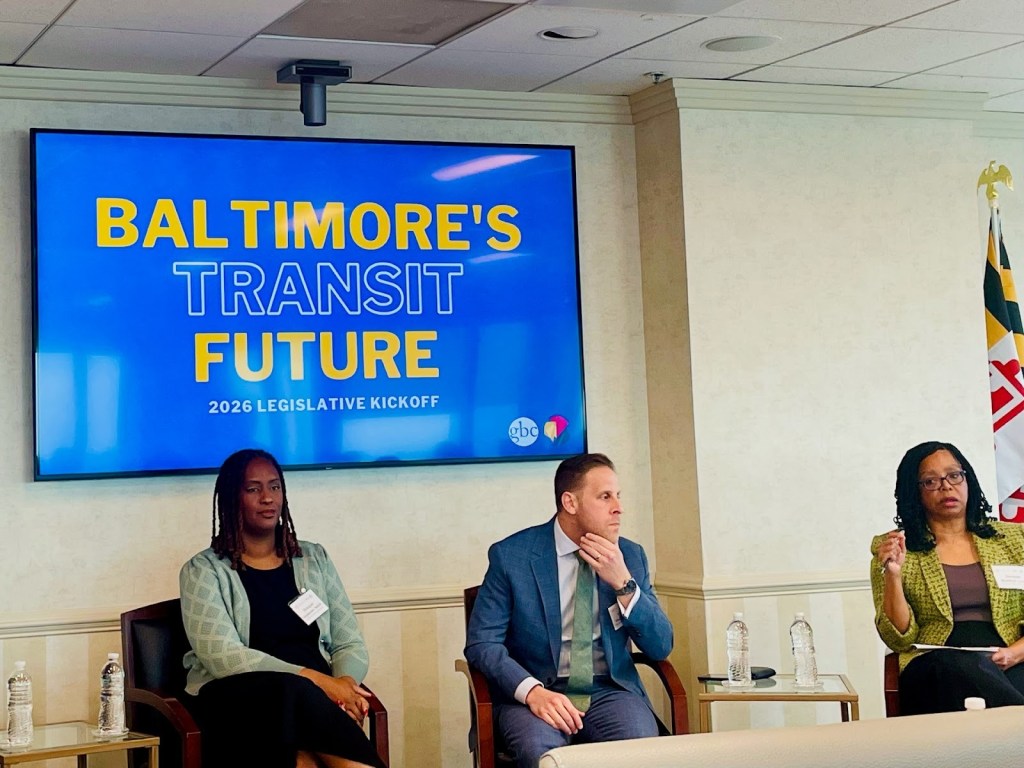
Baltimore’s Transit Future 2026 Legislative Kickoff on January 8
Co-hosted by economic development conveners, Greater Baltimore Committee (GBC) and Greater Washington Partnership (GWP), the event posed a core question to state legislators, state transportation officials, and anchor institutional leaders:
Why should employers care about improving public transportation systems in Baltimore?
Patrice Kingsley, Strategic Operations Manager with top Maryland employer and health coverage provider CareFirst, answered this best by sharing an all too familiar story of the Baltimore transit system hindering employment opportunities.
When the company launched the West Baltimore Workforce Development Initiative, participants frequently raised issues with relying on a city bus service to not only get to work on time, but also get their children safely to school.
With only 7.5% of available jobs in Central Maryland near public transit stops in 2025 (down from 11% in 2015 according to the Transportation Alliance’s 2026 Transportation Report Card), the talent pipeline will shrink, thus inhibiting growth and sustainability of local businesses.
But why does reliable public transit system matter to consumers?
From my own rider experience, buses skipping stops and running 20-plus minutes behind schedule are reasons enough for me to rideshare to my destination within the city. Even this Plan B will get more costly—for both transit users and drivers alike—if every potential transit rider either hits the road in a vehicle or has to stay home and miss out entirely on contributing to the local economy. Just imagine our collective future with:
- Surge pricing and insurance premium hikes
- Potholes, traffic, and increased taxes to cover capital improvements
- Missed appointments and slower service and loss wages
And how will Baltimore transit improvements affect residents outside the city?
Maryland General Assembly Delegate Stephanie Smith, representing District 45 and East and North East Baltimore residents, recognizes that multi-modal transit advocacy may not resonate to everyone.
In her panel discussion remarks, she reminded everyone that even if you personally do not need to take public transit to get to work, drop off kids at school, run errands, or access health care, “someone you depend on needs transit options.”
Echoing my favorite urbanist adage, “cars do not support businesses, people support businesses,” leaders at this event made the case for one critical addendum:
More transit options support the people supporting businesses.
To form this habit of transit ridership, Baltimore civic and business leaders need to minimize the risk by increasing resources and improving reliability.
This is why the GBC and GWP’s Baltimore’s Transit Future coalition is advocating for the following priorities this General Assembly session:
Ready to share your transit-rider story to lawmakers this 2026 General Assembly Session?
Join #BetterTransitNow advocates on February 2, 6pm, in Annapolis.
 L. Rose Creative
Leave a comment