CreativeMornings (CM), my favorite monthly event series in 247 global cities, brings together artists, advocates, and overall curious people to draw inspiration from interdisciplinary topics.
I am always excited to attend the Baltimore chapter events (volunteer-run and hosted by Kira Wisniewski).
Last Friday’s (Feb. 28) event with Jen White-Johnson, a neurodivergent artist and disability community advocate, was my much needed inspiration, after a challenging winter of personal illness and overall democratic pandemonium.
Still lingering with me today…the recipe for Vibrant Accessibility as the secret sauce for creative community events.
How do gatherings activate creativity?
Step 1: “Hold space for [our] inner child”
Jen White-Johnson
Jen kicked off her presentation by sharing a photo of her as a little, smiling, active girl. Hopscotching through her life story, filled with lots of 90s-throwback fashion and pop culture anecdotes, we learn about her late-in-life autism and ADHD diagnosis. Through this lens of self-discovery and acceptance, she creates vivid collages to cast a bright vision for the Black Neurodivergent community.
Community Flavor
Colorful details wake up the senses, set a playful tone, and pave different on-ramps for people to ease into conversations and content at their own pace. Key Ingredients:
- Bright signage
- A goofy welcome, like an air dancer* at the door
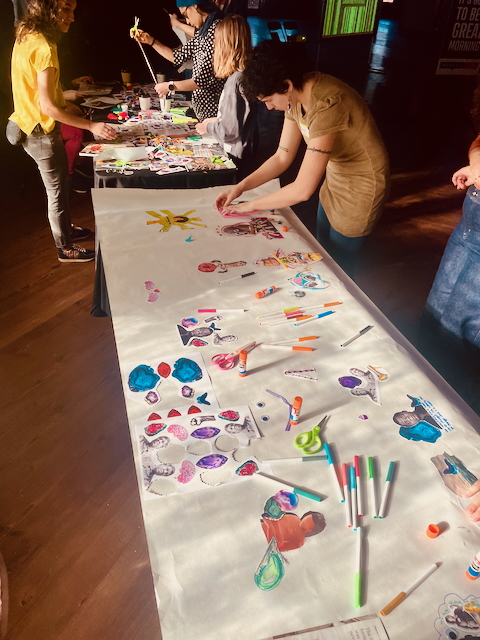
- Name tag tables with art supplies and stickers
- Interactive and tactile activity, like a communal collage-making station
Step 2: “If you love on your community, other communities will love it too.”
Jen White-Johnson
Jen discussed the impact her son, Knox, who is also neurodivergent, has had on her. Knox’s uninhibited joy shaped their beautiful collaborative zine series and fuels her ongoing advocacy to celebrate the “differences that embolden us.”
Community Flavor
A nomadic and free model showcases the versatility of spaces; encourages exploration of neighborhoods; helps remove barriers to participation; and entices community-oriented sponsors. Key Ingredients:
- Asset-based language
- Venues accessible by multimodal transit
- Local, values-aligned business partners
Step 3: “Folks will remember how they feel when they leave a space.”
Jen White-Johnson
Jen showed how true accessibility in placemaking is more than facilitating the movement and interactions within a space. For example, through her zine-making workshops at Baltimore Museum of Art’s space in the recently re-invested Lexington Market, she invites people of all backgrounds and skill sets to create their own colorful art book and engage in conversation about acceptance and justice. To her, “accessibility is an art form” that affirms each individual’s contributions to the community.
Community Flavor
Offering rituals, options, and collective values creates a welcoming, safe, and accessible space for connection. Key Ingredients:
- Signature greetings, like Kira’s “Good Baltimorean!” and “Black Lives Still Matter”
- Shout outs to American Sign Language interpreters and local business partners
- Access to content during and after the event
- Shared purpose and identity, like “people and companies that give a damn.”
- Welcome and Farewell rituals, such as icebreakers and communal breaths
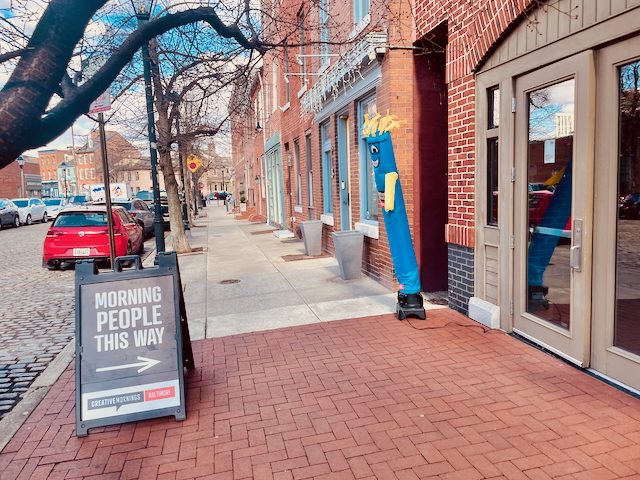
*An aside, did you know what these car dealership fixtures were called? Neither did I until researching for this post.


Leave a Reply